
Declination in Egypt
The dwarf's farewell

When I recently travelled to Egypt, I was searching for any information I could possibly find related to astronomy and/or astrology. I was not expecting to discover anything about the zodiac, but I kept my eyes open for anything even remotely connected. In fact, it was hard not to see the many pointers.
I remember entering the pyramid of Djoser, which from the outside looks rather shabby and unimpressive, but compensates for this with its much greater age. The pyramid descends very deeply, and in one of its smaller halls the walls are literally covered in stars. They are everywhere. Most of the colour has faded, yet traces are still visible. The Egyptians used to mark the figures or deities representing constellations with a small star, so there would be no doubt about their meaning.
When I visited the Egyptian Museum, I found countless references to stars and constellations, but one object impressed me in particular.
It was on the backside of a granite sarcophagus lid depicting a naked dwarf. Dwarfs were held in great esteem during the Old Kingdom — a tradition that was apparently lost in later periods. Images of dwarf women were found on amulets and were believed to aid women during childbirth. Some dwarfs even rose to become counsellors or attained other high-ranking positions and in the case of this personality, called Djeho.
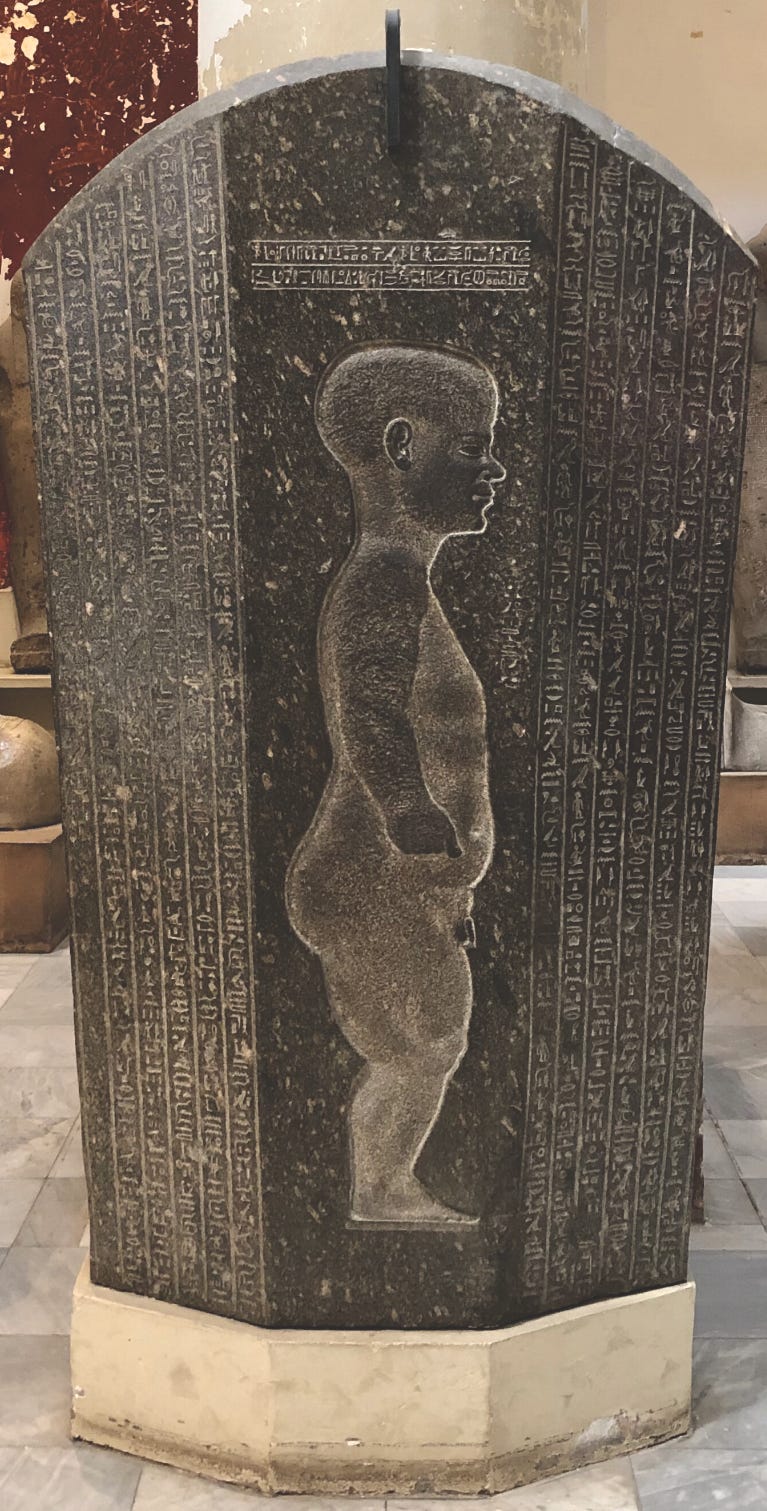
The figure of the dwarf was carved on the upper side of the lid, but what struck me far more was the inside of the same lid.
Coffins and sarcophagi usually show Khepri, a solar symbol that can either represent the Sunrise or the Sun as a general symbol of life. But this time, there was no Khepri or similar symbols.
What I found was a goddess holding the Sun disc over her head, surrounded by six symbols on her right and six symbols on her left. The side figures look to me like sitting women in the yogi squat. Each figure has a star on its head, clearly identifying it as either a star or a constellation. But since the observer’s attention is immediately drawn to the central Sun, constellations make far more sense than stars.
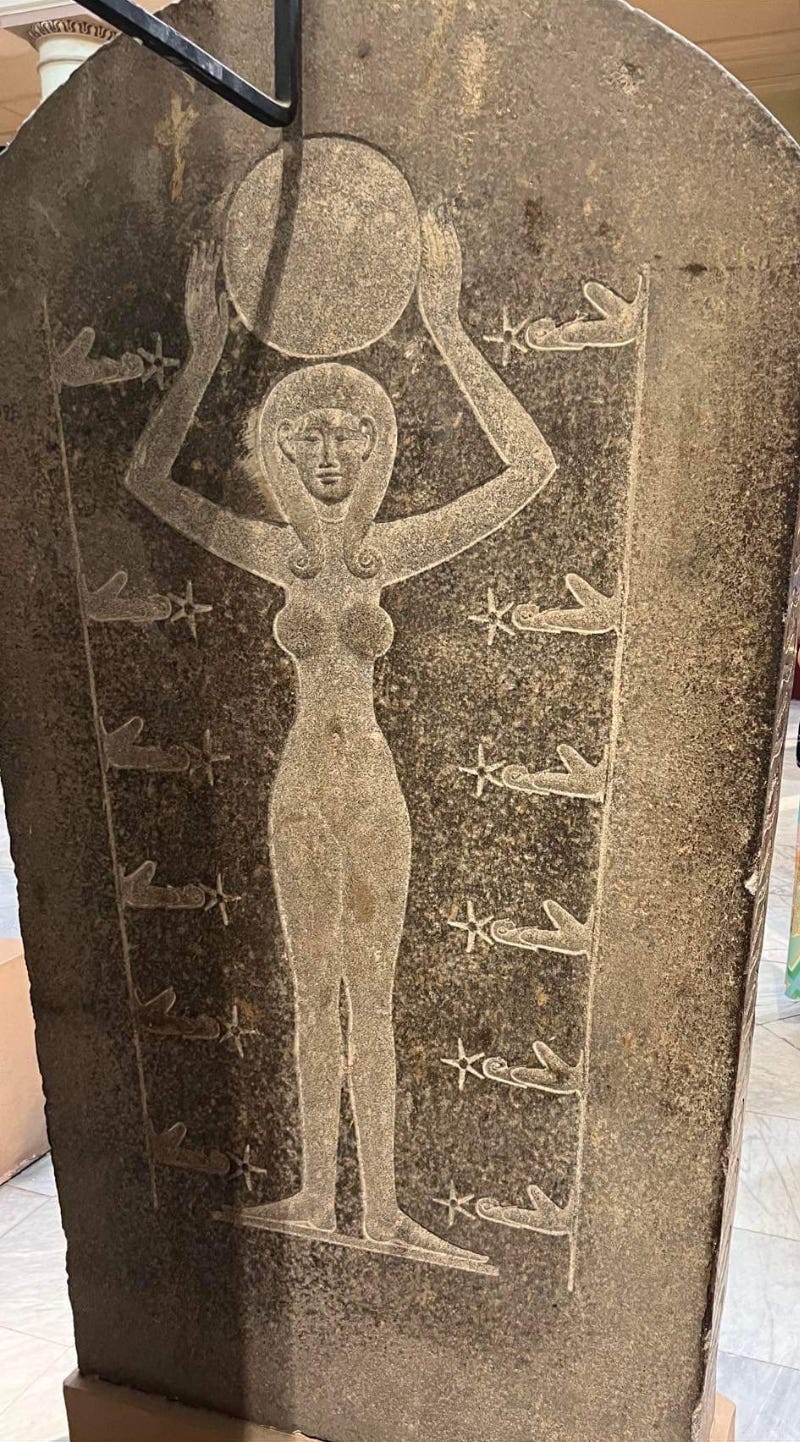
There are in total twelve figures, representing either the twelve constellations or the twelve months. One relates to space and the other to time but of course these definitions are basically synonyms. In both cases, the elevated Sun marks the solar culmination or highest elevation. Therefore, if the solar disc in the centre symbolizes the summer solstice, then the six figures on the right correspond to the ascending signs (which today would be Capricorn through Gemini), while the six figures on the left represent the descending signs (Cancer through Sagittarius). In essence, this would be a perfect depiction of the solar declination, the Sun’s annual journey through the signs.
I don’t believe the artist intended to highlight individual constellations or zodiac signs here, but rather to illustrate the Sun’s motion through the signs — that is, through the calendar months and the passage of time.
Declination, however does not relate solely to the annual revolution of the Sun. Due to the precession of the equinox, the vernal equinox slips backwards in the zodiac by 1° every 72 years. This means that over a period of ca. 2000 years, the vernal equinox changes its sing-and so does the summer solstice.
But there is something else. Something is odd in this female image. The Egyptians were extraordinary sculptors. Nothing was left to chance and every symbol has its meaning. Moreover, this image here is engraved in granite, one of the hardest stones to work with. The artist must have had a very precise concept in mind before starting his creation.
So maybe this is just my fantasy, but here it comes. Look at the lady’s face.
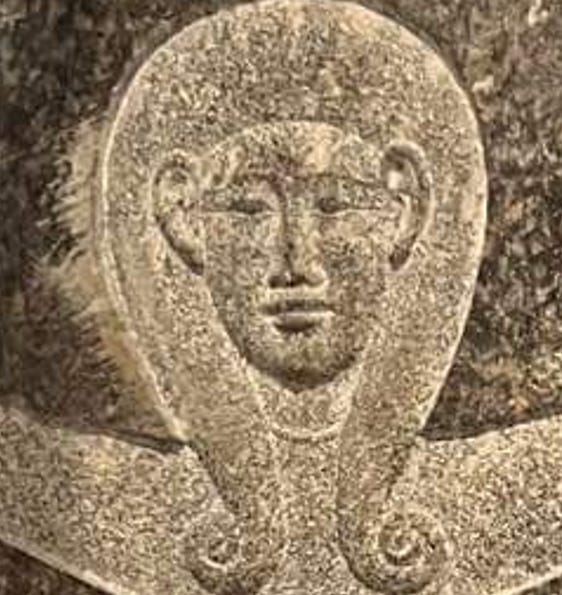
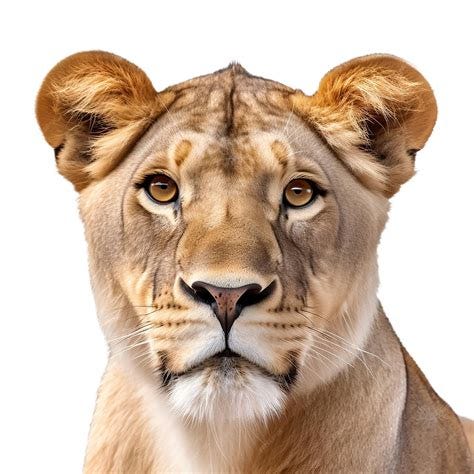
While her face has perfect alignments, her ears are out of proportion and also far to high on the head. Each ear is almost half the size of her faces’ side! Actually, they look more like the ears of a big cat.
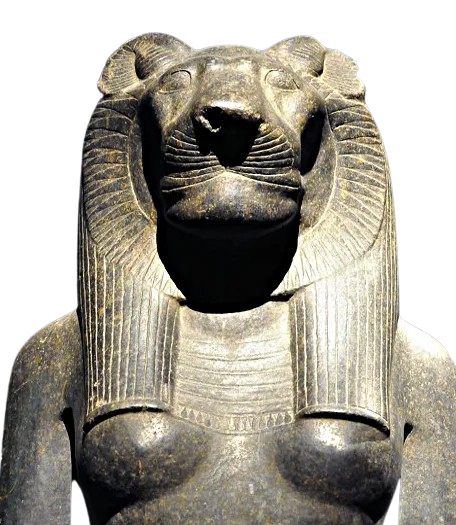
Also her hair might just be the fashion of her time, but honestly, it just looks like the modern symbol for Leo.
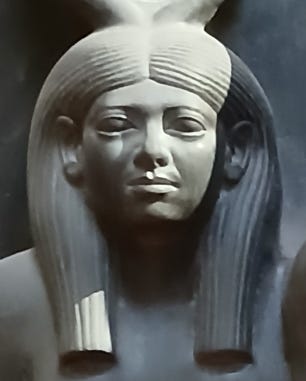
The Egyptians used wigs or wore their natural hair like in this image:
The deities were also represented with similar wigs as Sekhmet in the following image:
Is it possible that the goddess on the coffin lid points to the solstice in Leo???
The solstice might be intended here not as a specific date in the year, but as the culmination point of the Sun’s journey -its highest ascent. Wouldn’t this be something one might wish for a deceased family member or close friend: to reach the highest possible rank, success, or fortune in the afterlife?
To support this idea, one should also consider the side of the coffin lid.
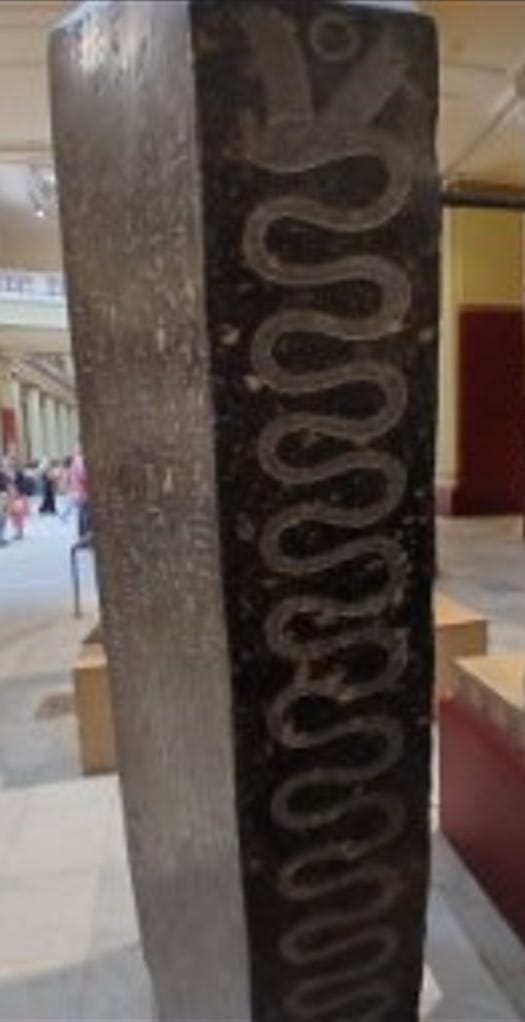
It depicts a winged serpent, identified as Wadjet, symbolising the cycle of resurrection and rebirth. The same emblem is carved on the opposite side of the lid. Wadjet was part of the Nemes, the pharao’s royal headdress.
This dwarf must indeed have been held in very high esteem, judging by the well-wishes he received at his passing.
The coffin lid is exposed in the (Old) Egyptian Museum, the photos of the coffin and the wig are mine, the others are creative commons.
© Tania Daniels 2025
Wonderful detective work, Tania, thank you for sharing this!
I love ancient Egypt and the Goddesses with enlarged ears could be related to Hathor? Whose ears are actually ovaries